
Digital marketing has become an essential part of modern business.
Introduction
Digital marketing has become an important part of modern business. As people spend more time online, businesses use digital platforms to reach their target audience, promote their products and services, build brand awareness and generate leads.
Digital marketing includes different online strategies such as Search Engine Optimization (SEO), social media marketing, content marketing, email marketing and online advertising. This guide explains the basics of digital marketing, its major types, the importance of SEO and how businesses can use digital strategies to grow online.
What Is Digital Marketing?
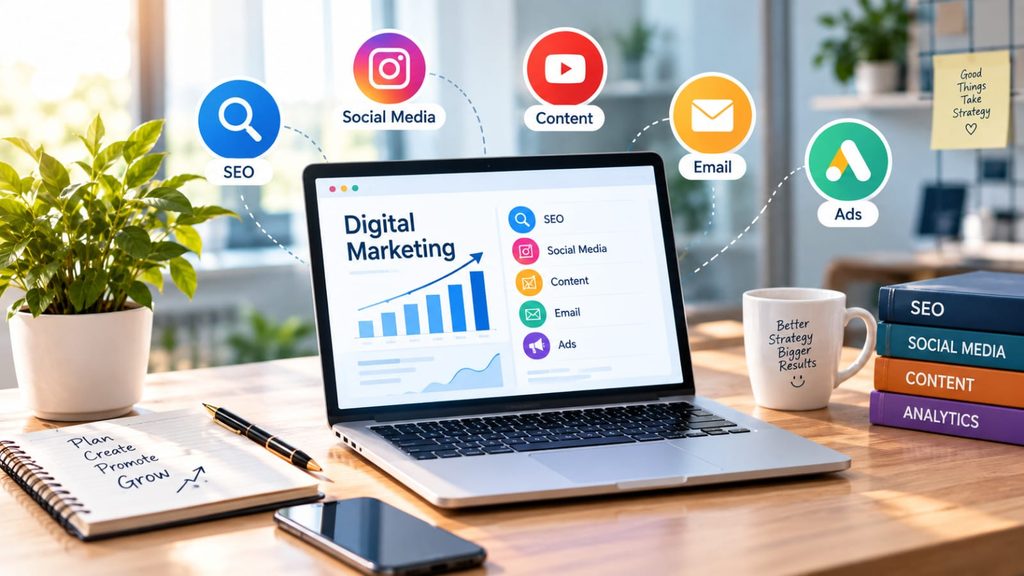
Digital marketing is the process of promoting products, services or brands through digital channels such as search engines, websites, social media platforms, email and online advertising.
The main purpose of digital marketing is to connect businesses with their target audience through the digital platforms they use. It allows businesses to reach potential customers, communicate with them and measure the performance of their marketing activities.
How Does Digital Marketing Work?
Digital marketing begins by identifying the target audience and understanding their needs. Businesses then choose suitable digital channels, create relevant content and promote their products or services.
The results can be measured using different digital marketing tools and analytics. Marketers can use this information to understand what works and improve their future strategies.
Why Is Digital Marketing Important
Digital marketing is important because customers increasingly use the internet to search for information, compare products and services and communicate with businesses.
Wider Audience Reach
Businesses can reach customers beyond their local area through websites, search engines and social media platforms.
Targeted Marketing
Digital platforms allow businesses to reach specific audiences based on factors such as location, interests and demographics.
Measurable Results
Businesses can measure website traffic, clicks, engagement, leads and other performance metrics to understand their marketing results.
Cost-Effective Promotion
Digital marketing offers both organic and paid methods. Businesses can choose strategies according to their goals and budget.
Better Customer Engagement
Social media, email and other digital channels allow businesses to communicate directly with customers and receive feedback.
Types of Digital Marketing
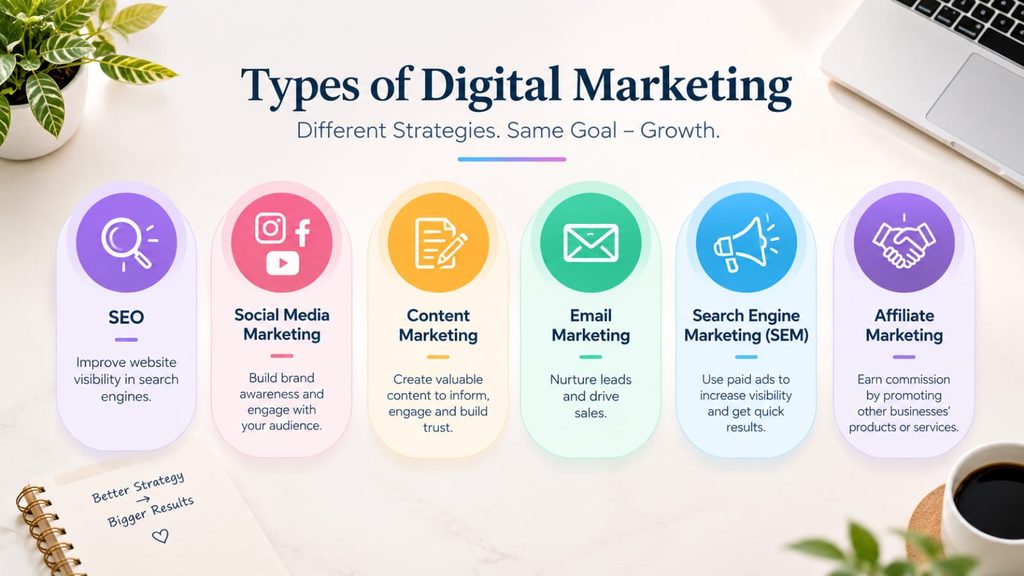
There are several types of digital marketing, and businesses often combine different methods to achieve their goals.
Search Engine Optimization (SEO)
SEO is the process of optimizing a website and its content to improve its visibility in search engine results. It helps businesses attract organic traffic from people searching for relevant information, products or services.
Social Media Marketing
Social media marketing involves promoting a business through platforms such as Instagram, Facebook, YouTube and other social networks.
Businesses can use social media to increase brand awareness, share content, communicate with customers and generate leads.
Content Marketing
Content marketing focuses on creating useful and relevant content for a target audience.
Examples include:
- Blog posts
- Articles
- Videos
- Infographics
- Guides
- E-books
- Good content can answer customer questions and help build trust with an audience.
Email Marketing
Email marketing involves communicating with customers or potential customers through email. Businesses can use it for newsletters, offers, product updates and useful information.
Search Engine Marketing (SEM)
Search Engine Marketing involves promoting websites through search engines, including paid advertising such as Pay-Per-Click (PPC) campaigns.
Affiliate Marketing
Affiliate marketing is a performance-based method where individuals or businesses promote another company’s products or services and may earn a commission for qualifying sales or actions.
Four Types of SEO
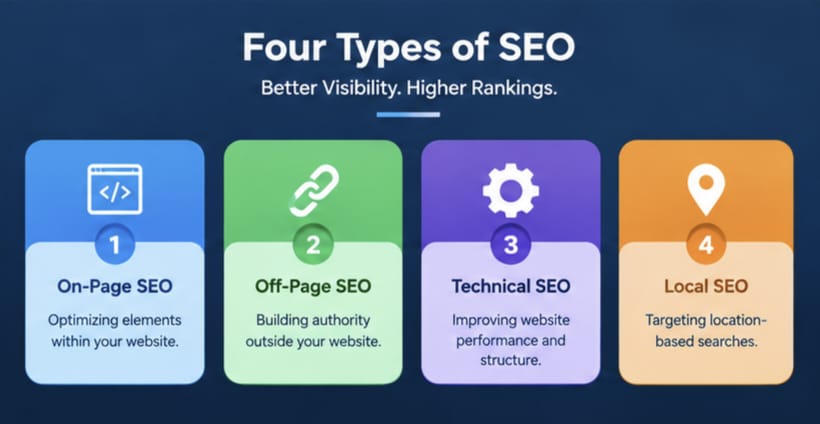
SEO can be divided into four major types:
On-Page SEO
On-Page SEO refers to optimizing elements within a website or webpage.
Important On-Page SEO factors include:
- Title tag
- Meta description
- Heading tags
- Keyword optimization
- Content optimization
- Image optimization
- ALT text
- URL optimization
- Internal linking
Off-Page SEO
Off-Page SEO involves activities outside the website that can help improve its visibility and authority.
Examples include backlinks, brand mentions, digital PR and relevant external references.
Technical SEO
Technical SEO focuses on the technical aspects of a website that help search engines crawl, understand and index its pages.
Important factors include website speed, mobile friendliness, HTTPS, XML sitemap, robots.txt and website structure.
Local SEO
Local SEO helps businesses improve their visibility for searches related to a specific location.
Businesses can use local keywords, business profiles, customer reviews and accurate business information to improve their local online presence.
How to Create a Digital Marketing Strategy
A successful digital marketing strategy starts with understanding the target audience and setting clear goals.
Identify Your Target Audience
Understand who your potential customers are, what they need and which digital platforms they use.
Set Clear Goals
Set specific goals such as increasing website traffic, generating leads, improving brand awareness or increasing sales.
Choose the Right Digital Channels
Select channels such as SEO, social media, content marketing, email marketing or paid advertising based on your audience and objectives.
Create Useful Content
Create informative, relevant and engaging content that provides value to your target audience.
Measure and Improve
Track your results using analytics and make improvements based on the performance of your digital marketing activities.
Benefits of Digital Marketing for Businesses
- Digital marketing can help businesses:
- Increase online visibility
- Reach a wider audience
- Generate leads
- Build brand awareness
- Communicate with customers
- Increase website traffic
- Measure marketing performance
- Support business growth
Digital Marketing Career Opportunities
Digital marketing has created various career and freelance opportunities. People can develop skills in areas such as SEO, social media marketing, content creation, Google Ads, email marketing, website management and analytics.
Businesses also hire digital marketing professionals and agencies to manage their online presence and marketing campaigns.
Conclusion
Digital marketing is an important part of modern business growth. By using strategies such as SEO, social media marketing, content marketing, email marketing and online advertising, businesses can connect with their target audience and build a stronger online presence.
A successful digital marketing strategy requires the right audience, clear goals, useful content and continuous measurement. As the digital environment continues to develop, learning digital marketing skills can create valuable opportunities for both businesses and professionals.